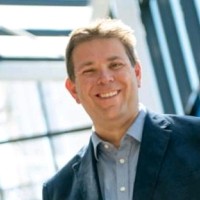
I'm Paul Holmes, and I lead PCH Business Consultants (sometimes called PCH Business Support). We help business owners who are overwhelmed, especially those running established engineering, manufacturing or technology firms, to regain control, simplify operations, and grow profitably.
Our approach is not generic coaching. We work deeply with clients: diagnosing operational bottlenecks, resetting strategic goals, designing clearer processes, and helping owners step out of day-to-day firefighting so they can lead.
I combine my corporate experience in engineering, operations and technology with a network of almost 30 associates and specialists, so that our clients access a blend of strategic insight and practical execution support.
Before founding PCH, I spent many years in engineering, innovation, technology and operations roles in high-growth and capital projects environments. Over time, I observed that many businesses with strong technical foundations stalled or became chaotic as the founder became the bottleneck.
I founded PCH six years ago to help those businesses. My mission is to help owners reframe themselves, not as the centre of everything, but as the leader, strategist and visionary, supported by systems and team.
I believe too many consultancies push generic frameworks. With PCH, I wanted to build a consultancy grounded in operational reality, one that works with people in their businesses, not impose top-down theory.
I wanted to create a consultancy that bridges these gaps, offering deep operational diagnosis and tailored change rooted in real business challenges.
When PCH began, I invested time in discovery engagements, offering deep diagnostic sessions with prospective clients to uncover hidden inefficiencies. I used those early client projects to prove the value of clarity, rather than sell long packages prematurely.
I built relationships with growth hubs, local business networks, and sector forums to find businesses that were at a tipping point, turning points where growth demanded structural change.
My core offerings include deep diagnostic sessions to uncover inefficiencies, strategic goal resetting and clarity work, process design and operational simplification, leadership development for founder-owners, and a network of 30 associates for specialist execution support.
A recurring challenge was skepticism: many business owners knew "things aren't working" but weren't convinced external support could fix it. To counter that, I leaned heavily on client testimonials, case stories (with permission) and showing small, rapid wins early.
Another challenge was maintaining credibility: my approach isn't standard templates but insight and tailoring. That required being clear on how I work, transparent on expectations, and disciplined on deliverables.
I also made a conscious decision early to work only with clients who have enough scale (often multimillion-pound turnover) so that our changes would have meaningful impact and justify the investment.
Over time, PCH expanded its reach. We now work across multiple sectors (beyond engineering and technology) with businesses that are scaling, evolving, or needing structural change.
Our model has grown: some clients still receive hands-on interventions; others adopt parts of our methodology with associates or fractional support. We're building a network of experts so we can flex to client needs rather than force one model.
I am also active in thought leadership: publishing insights, speaking in networks, and using video (via our YouTube presence) to amplify our ideas.
If I were starting PCH again, I would begin with stronger case studies collecting quantitative data (revenue lift, time saved, team growth) to reinforce impact from early engagements, hire or partner earlier so I wasn't the bottleneck for every project, invest more in content earlier with video, podcast and articles to showcase our thinking in accessible form and attract ideal clients, and build measurement frameworks sooner to track outcomes not just outputs from the beginning.
Going forward, I aim to deepen operations in existing sectors, while selectively entering new ones where our insight model works.
I plan to grow our validated methodology into learning assets (modules, playbooks) that clients or partners can use.
I also intend to strengthen our network of associates and specialists so we can be more flexible and responsive at scale.
Finally, I want to track impact more rigorously, not just outputs, but outcomes (profitability, growth per client, founder stress reduction).
PCH works with overwhelmed business owners, particularly those running established engineering, manufacturing, or technology companies. The goal is to help you regain control, simplify your operations, and achieve profitable growth.
The approach is grounded in operational reality, not just theory. Instead of generic frameworks, PCH performs a deep diagnosis of your specific operational bottlenecks, helps reset strategic goals, and designs clearer processes. The aim is to help you move from daily firefighting to strategic leadership.
Everything begins with a discovery phase. PCH offers deep diagnostic sessions to uncover hidden inefficiencies within your business. This helps prove value quickly and ensures that any proposed solutions are tailored to your actual challenges, rather than selling a long-term package upfront.
That's a common concern. PCH builds trust by focusing on delivering small, rapid wins early in the process. They also rely on transparent client testimonials and case stories to demonstrate a track record of success, showing you the tangible impact of their work.
The philosophy rests on four pillars: providing insight-driven solutions instead of off-the-shelf packages, implementing phased change over a realistic timeline, ensuring you own the changes for long-term independence, and combining both strategic and operational expertise.