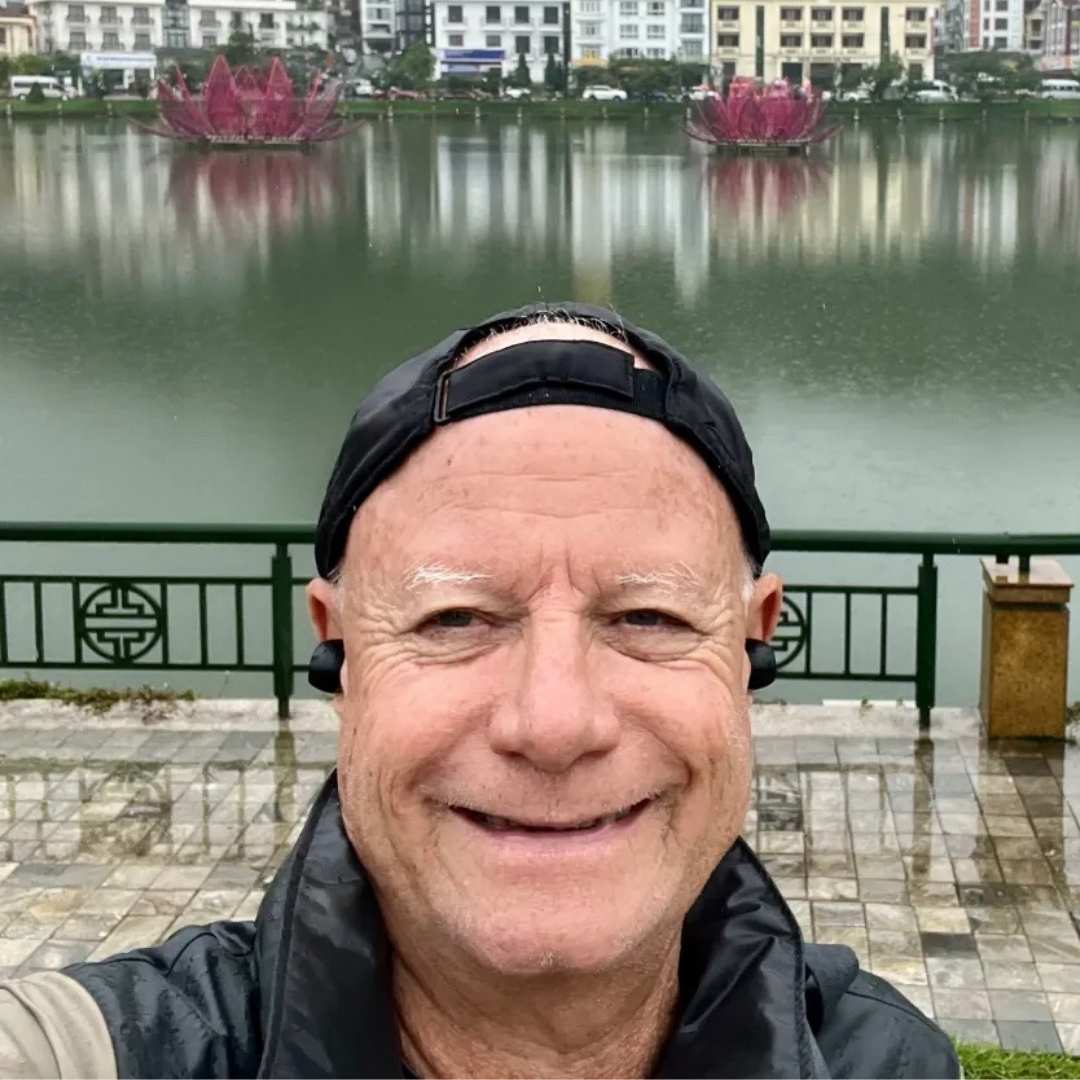
I'm Jean-Denis Borel, a Swiss film director and instructor of mindfulness and meditation. My work seeks to bridge inward awareness and outward purpose, crafting visual stories for organisations genuinely committed to the greater good.
Since the early 2000s I've directed documentaries and commissioned video projects for NGOs, social organisations, and institutions that are actually driven by values rather than profit. I genuinely believe that media must engage both the inner life and external realities at the same time. My practice of mindfulness and full presence isn't an appendage or a side thing, it's absolutely integral to how I approach storytelling.
After around 2010 I began practising meditation daily, and over time I saw how that cultivation of clarity, attention, and genuine compassion could feed more honest and grounded films. Not just better technically, but more truthful.
On my website I present two primary film tracks: documentaries and mandated commissions (for institutions, organisations). I deliberately aim to work with clients whose mission is aligned with social, ecological, or cultural welfare, not just anyone who'll pay.
I also have credits listed on IMDb, including Oliver Twist (2005), Mon frère se marie (2006), and Young, Beautiful and Screwed Up (2003). These works indicate my experience across narrative and documentary forms, and help ground my offer to clients in proper professional credentials rather than just nice ideas.
In 2023 and 2024 I properly formalised that path by training as a meditation instructor and began offering courses to others. On my site you can find upcoming courses in Lausanne (for example autumn 2025) covering themes such as "Apaiser l'esprit" (calming the mind) and "Agir avec sagesse" (acting with wisdom).
My meditation page describes how I trained with Martin Aylward and Mark Coleman, and how I view mindfulness not as just a technique or stress management tool but as a lens through which creative and social action become way more rooted and authentic.
I believe one must genuinely explore one's mental habits, awareness, and biases to act authentically in the world. This dual path, inner and outer, is absolutely central to my identity as both filmmaker and instructor.
One personal challenge was balancing the demands of filmmaking (deadlines, clients, budgets) with actually preserving a contemplative inner stance. At times the external pressure just threatens to completely silence intuition or disrupt presence. I learned to allocate dedicated time for reflective practice so that I genuinely stay centred, not just rushing through everything.
Another challenge was persuading clients that contemplative or value-driven films aren't just "soft" or marginal work. I counter that by anchoring proposals with really clear story structure, proper visual craft, and measurable outcomes, showing it's serious work.
Also, combining two domains (film and mindfulness) sometimes meant needing to educate audiences: some film clients were completely unfamiliar with contemplative framing, some meditation students were unfamiliar with visual storytelling. I treat each as a translator role, bridging different sensibilities and languages.
Invest properly in inner habits: the quality of your inner state genuinely influences every single external act. Let your values actually guide the kind of clients you accept; don't compromise for revenue alone, however tempting. Simplicity often reveals what's actually essential. In film and in life, less baggage often equals stronger signal, clearer message. Be patient: bridges between inner and outer work may take proper time for others to understand, don't rush that. Build structures (contracts, client expectations, pipelines) early so creative space is actually protected from constant firefighting.
If starting anew today, I would:
I plan to properly expand both sides: more films with genuine mission alignment (like environment, social justice) and more meditation courses or retreats in Switzerland and beyond. I'm really interested in combining these: contemplative film residencies, media plus mindfulness retreats where both practices inform each other.
I also want to publish essays, visual meditations, or short films exploring the border zones between inner life and outer systems. Over time, I genuinely hope to mentor younger creators who want to combine contemplative practice with media work, because loads of people are searching for that.
He focuses on documentaries and commissioned video projects for non-governmental organisations, social organisations, and institutions that are driven by strong values. He deliberately chooses to work with clients whose mission aligns with social, ecological, or cultural welfare.
For Jean-Denis, mindfulness is not a separate activity but is integral to his storytelling approach. He finds that daily meditation helps cultivate clarity, attention, and compassion, which leads to more honest, grounded, and truthful films.
His approach is unique because he combines a filmmaker's sensibility, focusing on rhythm and story, with his meditation courses. He also brings documentary integrity and a contemplative perspective to his film projects, ensuring a deep coherence between his inner practice and his external creative work.
Yes, he offers meditation courses and is planning to expand into media and mindfulness retreats. You can find information about his upcoming courses in Lausanne, covering themes like calming the mind and acting with wisdom, on his website.
He has navigated several challenges, including balancing the intense demands of filmmaking with his contemplative practice. He also works to persuade clients that value-driven films are serious and impactful, and he often acts as a translator between the world of film and the world of mindfulness for his different audiences.