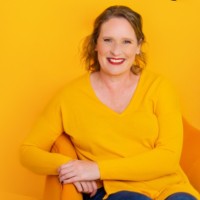
I'm Felicity Cowie and I run Cowie Comms from Cheltenham, UK. At Cowie Comms I offer communications training for corporates, specialising in business storytelling, media relations and change-communications support. My mission is to help organisations "hear themselves think" so they can navigate transformation with clarity.
My background is in journalism. I worked at BBC News, Panorama and ITV, and I bring that journalist's mindset into my work. Over time I've developed training, facilitation and consultancy programmes grounded in storytelling and media practices.
I currently work with leadership teams, internal communications departments and transformation programmes. My services include narrative development, workshop training in storytelling, media training (for spokespeople), and advice on aligning messages during times of change.
Throughout my time as a journalist I learned how stories travel, how people latch on to narrative, and how to dig for real insight under pressure. After transitioning into consulting I saw how many organisations struggled to translate change into compelling internal and external communication. They had plans, budgets, and strategy, but often lacked clarity in how to express their transformation in a way people would understand, believe in or act on.
I started Cowie Comms because I believe communications is not a bolt-on but central to success, especially when businesses shift direction, adopt new operating models, merge, or rebrand. I wanted to bring media-grade storytelling techniques into corporate settings, to help teams become more confident communicators and make change stick.
That led to my book Exposure: Insider Secrets to Make Your Business a Go-To Authority for Journalists, which explores how organisations can gain media traction.
The corporate communications industry is filled with soft skills training and theoretical frameworks, but I noticed something essential missing: practical storytelling techniques grounded in real journalism that organisations could deploy immediately. Many companies facing transformation were experiencing plans, budgets and strategy without clarity in how to communicate change, messages that people didn't understand, believe in or act on, scepticism about what "storytelling" means in business context, generic training modules rather than tailored narrative work, and theory without tangible, usable tools for immediate deployment. I wanted to create a consultancy that bridges these gaps, bringing media-grade storytelling into corporate settings with practical frameworks teams can use right away.
When I launched Cowie Comms, I leaned on connections from my journalism days and the small consulting work I had been doing. My first clients were often organisations facing visible change (e.g. restructures, digital transformation or reputation challenges) who needed external support with their internal or media-facing communications.
I ran pilot workshops and narrative sessions, delivered them in person or virtually, and asked clients for feedback. Early on I made sure each engagement produced tangible outputs: narrative frameworks and story structures, message maps for different audiences, sample scripts and communication templates, media training for spokespeople, and change communication strategies. This ensured clients could see value immediately.
One significant challenge was that many organisations had little understanding of what "storytelling" means in a business context. That caused scepticism. I addressed that by offering free seminars or internal previews, showing before and after message versions, and using real-world examples from journalism to illustrate the difference.
Another challenge was scope creep, clients would ask for extra deliverables mid-project. I learnt to define deliverables tightly upfront, to include "out of scope" clauses, and to phase work (e.g. diagnostics phase, narrative phase, execution phase).
Over time Cowie Comms expanded beyond Gloucestershire and Cheltenham. I have worked with clients including Virgin Atlantic, Here Technologies, the NHS, Specsavers, UCAS and others. I also appear as a speaker or facilitator at conferences, often weaving in stories from both journalism and business.
Content marketing: Substack newsletter offering free practical communication resources each month.
Speaking engagements: Listed via speaker bureaus like JLA to attract corporate engagements.
Client referrals: Word-of-mouth recommendations from communications and leadership networks.
Media presence: Leveraging journalism background through podcast interviews and articles (e.g. "The Merri-Cast").
Published expertise: Book Exposure establishing authority in media relations.
If I started over today, I would begin with a narrower niche focusing on technology, public sector or healthcare sectors and build deep reputation before broadening, document case studies more rigorously earlier with permission so I had shareable proof from the start, build a small team earlier with trusted associates who can co-deliver or take over parts of work to help scale without overloading, and create more structured offerings sooner by packaging services into clear tiers from the beginning.
Looking ahead, I plan to expand my digital and hybrid training work, so that clients outside the UK can benefit more easily. I'm exploring collaborative partnerships in Europe, especially for organisations undergoing transformation or change in their internal communications.
I also intend to build a short online masterclass series, based on my core narrative methods, which clients can use to bootstrap their story work before we engage live. And I hope to deepen relationships with existing clients, deliver multi-year narrative support, and track impact more quantitatively (message adoption, internal engagement metrics, media pickup).
Felicity provides specialised communications training for businesses. Her main areas of focus are business storytelling, media relations, and supporting organisations through periods of change. She draws on her extensive background as a journalist at places like the BBC to bring a practical, story-driven approach to corporate communications.
The training is created for leadership teams, internal communications departments, and anyone involved in a transformation programme. If your organisation is shifting direction, rebranding, or merging, her services can help you communicate these changes with clarity and confidence.
Unlike purely theoretical training, Felicity's method is grounded in practical, journalistic techniques. You won't just learn concepts, you'll leave with usable tools like narrative frameworks, message maps, and story structures that you can put into action straight away. Every programme is tailored to your specific challenges.
You can expect to receive concrete outputs that deliver immediate value. These often include clear narrative frameworks, message maps for different audiences, sample scripts, and practical media training for your spokespeople. The goal is to build your team's confidence and make your communications stick.
Many organisations struggle to explain transformation in a way that people connect with. This training bridges that gap by teaching you how to frame change as a compelling story. By using proven journalistic methods, your team will learn to create messages that people understand, believe in, and act on, helping you build a truly Fearless communication strategy.